
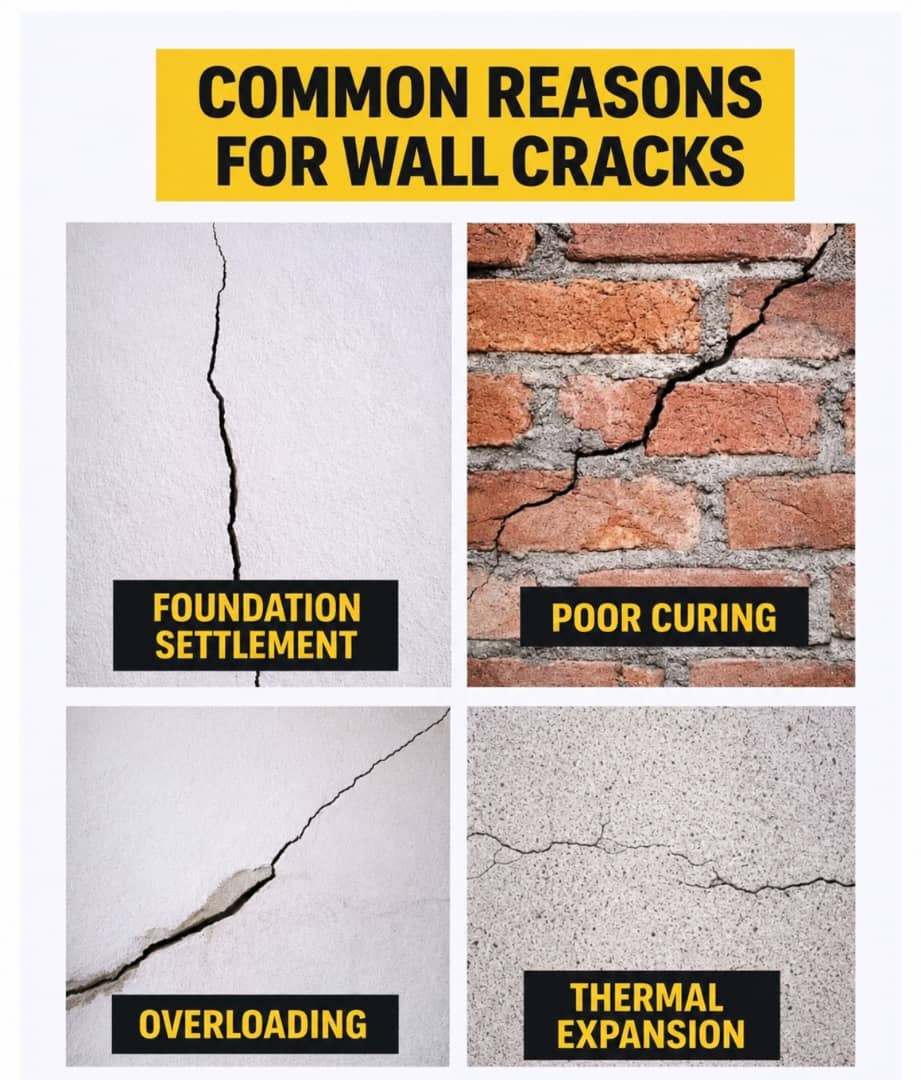
Common Reasons for Wall Cracks in Buildings
Wall cracks are a very frequent occurrence in both residential homes and commercial construction projects. While some fissures are minor aesthetic blemishes, such as hairline plaster cracks, others can be symptomatic of serious structural degradation. Understanding the root cause of these imperfections is crucial for preserving the integrity and longevity of any building.
Below, we outline the most prevalent reasons why walls develop cracks and what underlying issues they may indicate.
1. Settlement of the Foundation
A building's stability is only as reliable as the ground it stands on. If the soil beneath the structure is weak, excessively moist, or not properly compacted prior to construction, the foundation is prone to uneven settling over time. This differential settlement places immense stress on the structural frame, frequently resulting in distinct vertical or diagonal cracks along the walls.
2. Poor Construction Quality
The durability of a wall is directly tied to the quality of the materials and the methodology used during its construction. Several critical errors can lead to premature surface and shrinkage cracks:
- Improper curing: Failing to maintain adequate moisture and temperature conditions during the concrete curing process.
- Wrong cement to sand ratio: An imbalanced mortar mixture compromises the structural binding.
- Inferior materials: Using substandard bricks, cement, or steel reinforcement inevitably weakens the overall structure.
3. Thermal Expansion and Contraction
Building materials, particularly concrete and brick, are continuously subjected to environmental temperature fluctuations. They naturally expand when exposed to intense heat and shrink during cold weather conditions. If structural designs fail to incorporate proper expansion joints to accommodate these inevitable shifts, the resulting tension will invariably lead to visible cracking.
4. Moisture and Water Seepage
Water is one of the most insidious enemies of masonry. Chronic water leakage originating from compromised roofing, poorly sealed bathrooms, or defective internal plumbing can continuously seep into walls. This sustained moisture weakens both the plaster surface and the internal bricks, leading to localized swelling, efflorescence, and eventually, extensive cracking.
5. Structural Overloading
Every building is engineered to support a specific maximum load capacity. When additional floors are hastily added or heavy loads are introduced without undergoing a comprehensive structural redesign and reinforcement, the building's framework becomes overly stressed. This excessive burden often manifests as severe structural cracks, serving as a critical warning sign of potential failure.
6. Poor Workmanship
Even with high-quality materials, the absence of skilled labor can compromise a building's integrity. Instances of poor workmanship include improper bonding between brick courses, the application of weak mortar joints, or the critical failure to install adequate lintel support above doors and windows. These oversights create inherent weaknesses that quickly translate into fractures within the masonry.
"Identifying the type and direction of a wall crack is the first step in diagnosing a building's health. While cosmetic cracks can be easily patched, structural fissures demand immediate professional assessment to prevent catastrophic failure."
If you observe widening, diagonal, or stepped cracks in your property, it is highly recommended to consult with a professional structural engineer to evaluate the safety and stability of your building.
Protect Your Building's Integrity
Do not let minor cracks become major structural failures. The experts at Valiant Engineering provide comprehensive structural assessments and premium construction solutions to ensure your peace of mind.
Get a Professional Assessment